Scientias AI Labs

Scientias AI Labs

Scientias AI Labs publishes content on AI engineering, coding agents, machine learning, computer vision, NLP, audio AI, and modern software development workflows.

Python 3.15 AI Engineers: Best Features for Faster AI Pipelines 2026
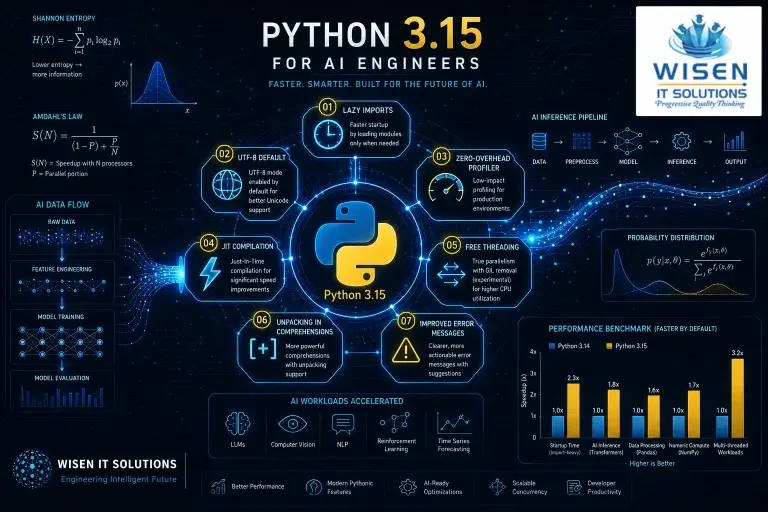
Technical infographic showing Python 3.15 for AI Engineers featuring seven key features — lazy imports, UTF-8 default, zero-overhead profiler, JIT compilation, free threading, unpacking in comprehensions, and improved error messages — with Shannon entropy formula, Amdahl's Law, AI inference pipeline, probability distribution equation, and performance benchmark chart comparing Python 3.14 and Python 3.15 speedups across AI workloads

Python 3.15 for AI Engineers is not a typical incremental release. Every major feature — lazy imports, UTF-8 default, zero-overhead profiler, JIT compilation, free threading, unpacking in comprehensions, and improved error messages — has a direct, practical impact on how AI engineers write, deploy, and maintain production AI systems. Final release October 1, 2026. Published by Wisen IT Solutions.
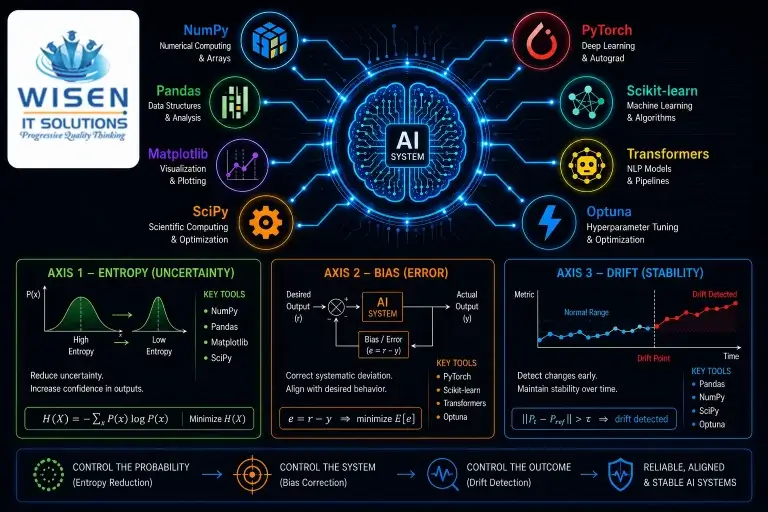
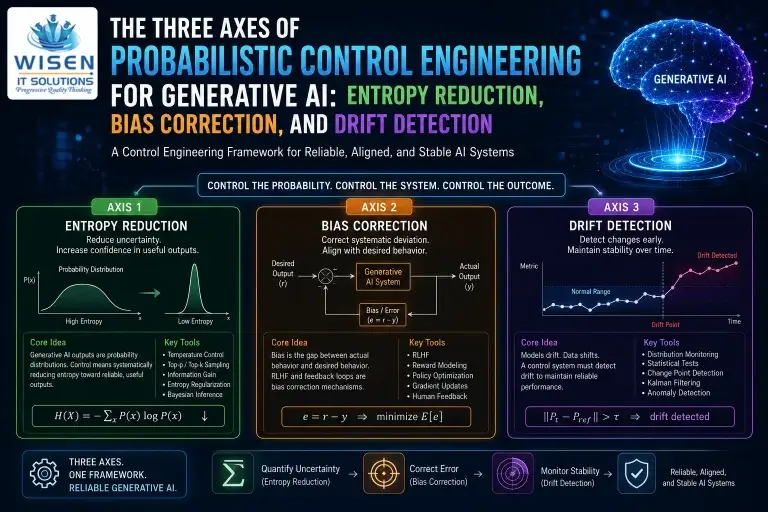
Probabilistic Control Engineering for Generative AI — Powerful Frameworks for AI Engineers 2026

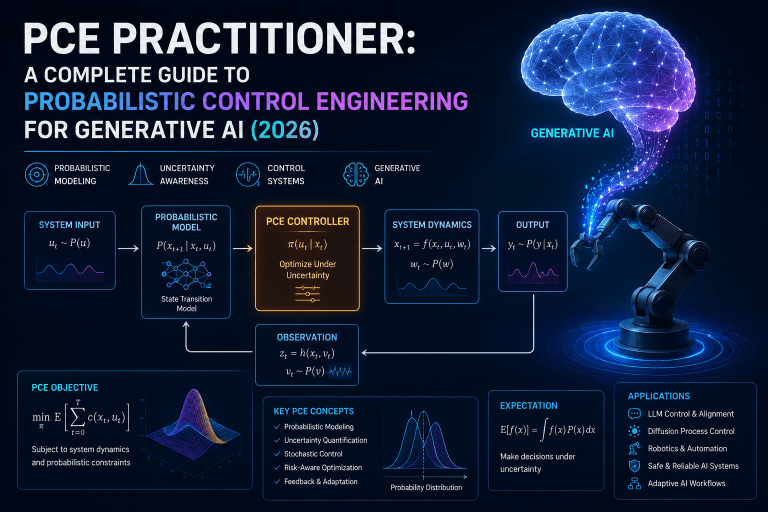
Probabilistic Control Engineering for Generative AI (PCE) is the definitive engineering discipline for building reliable, controllable, and production-ready Generative AI systems. This resource hub covers the complete PCE framework — entropy reduction, bias correction, drift detection, mathematical foundations, Python toolkits, and PCE Practitioner career guides. Published by Wisen IT Solutions, Chennai.

How Probabilistic Control Engineering Borrows from Classical Control Theory: The Engineering Foundations of Probabilistic AI

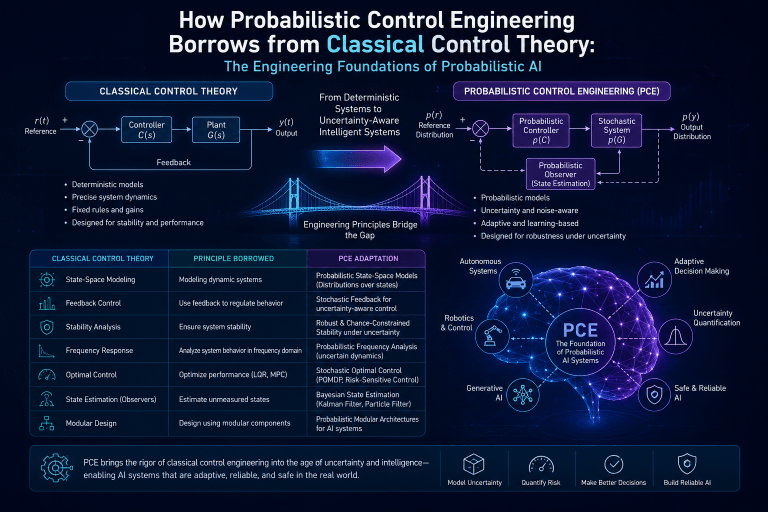
Technical infographic comparing classical control theory and probabilistic control engineering, showing feedback systems, stochastic control, uncertainty-aware AI systems, and adaptive probabilistic modeling

Most AI engineers don't realize how deeply Probabilistic Control Engineering borrows from classical control theory. This article traces the direct connections — from feedback loops to Bayesian inference, PID controllers to reinforcement learning, Kalman filters to modern AI systems — and explains why understanding classical control theory makes you a fundamentally better AI engineer in 2026.